

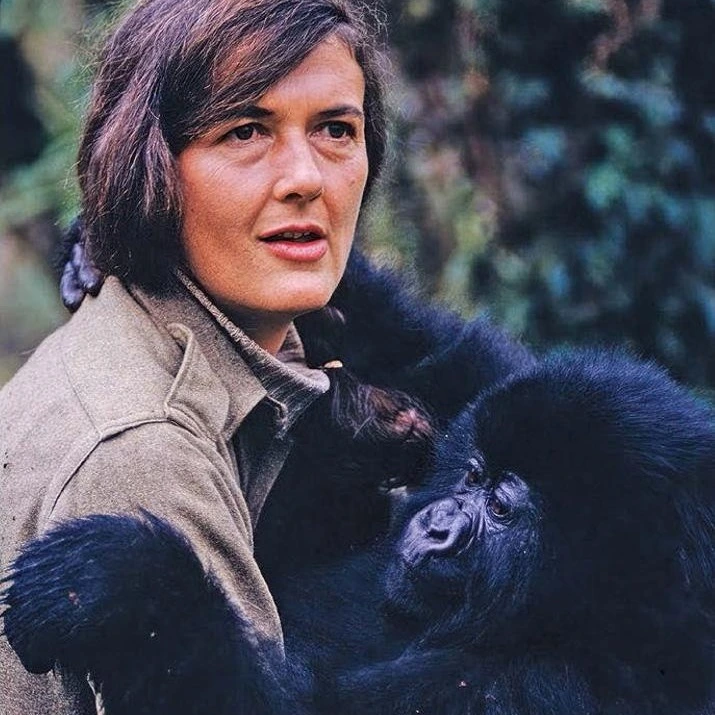
Dian Fossey remains one of the most influential figures in wildlife conservation history. Best known for her groundbreaking work with mountain gorillas in the Virunga Mountains of Rwanda, Fossey dedicated her life to studying, protecting, and advocating for one of the world’s most endangered primates. Her research not only changed scientific understanding of gorilla behavior but also played a major role in saving the species from extinction.
Today, her legacy lives on through gorilla tourism in Rwanda and the ongoing conservation efforts that protect mountain gorillas across Uganda, Rwanda, and the Democratic Republic of Congo.
Early Life and Path to Africa
Dian Fossey was born in 1932 in San Francisco, USA. Although she initially trained in occupational therapy, her passion for animals and wildlife was always strong. A life-changing trip to Africa in the 1960s introduced her to the region that would define her legacy.
Inspired by the famous paleoanthropologist Louis Leakey—who also mentored Jane Goodall and Birutė Galdikas—Fossey was encouraged to study gorillas in the wild. At the time, very little was known about mountain gorillas, and many people feared them as dangerous animals. Fossey set out to change that perception through long-term field research.
Arrival in Rwanda and the Start of Research
In 1967, Dian Fossey arrived in Rwanda and established the Karisoke Research Center in the Virunga Mountains between Mount Bisoke and Mount Karisimbi. The location was remote, rugged, and challenging, but it placed her in the heart of mountain gorilla habitat.
At Karisoke, Fossey began her long-term study of mountain gorillas, living in extremely difficult conditions for years. She spent countless hours trekking through dense forest, observing gorilla families, and slowly gaining their trust.
Her early research was difficult because gorillas were shy and avoided human contact. However, over time, Fossey developed unique methods of habituation—approaching gorillas gradually and peacefully until they accepted her presence.
Breakthrough Discoveries About Gorillas
Dian Fossey’s work completely changed the world’s understanding of mountain gorillas. Before her research, gorillas were widely misunderstood and often portrayed as aggressive animals.
Through careful observation, she discovered that gorillas are gentle, intelligent, and highly social animals with strong family bonds. Some of her most important findings include:
Gorillas live in stable family groups led by a dominant silverback male
They communicate through vocalizations, gestures, and facial expressions
They form deep emotional bonds within their groups
They are generally peaceful and avoid conflict whenever possible
They care for their young with remarkable tenderness and protection
These discoveries helped reshape global attitudes toward gorillas and laid the foundation for modern primate behavioral science.

Conservation Efforts and Fight Against Poaching
As Fossey’s research continued, she became increasingly alarmed by the growing threat of poaching and habitat destruction. Mountain gorillas were being killed for trophies, captured for illegal trade, or losing habitat due to human expansion.
In response, Fossey shifted her focus from pure research to active conservation. She became a strong and sometimes controversial advocate for gorilla protection.
She worked closely with local authorities, park rangers, and international organizations to combat poaching. Fossey also helped train and support anti-poaching patrols in the Virunga region.
Her strong opposition to poaching made her many enemies, but it also significantly reduced illegal hunting in key gorilla habitats.
Life at Karisoke Research Center
Life at Karisoke was extremely isolated and physically demanding. The research center had no modern comforts, and Fossey often lived alone or with a small team of researchers and assistants.
Daily life involved long hikes through steep volcanic terrain, unpredictable weather, and close observation of gorilla groups. Despite the challenges, Fossey remained deeply committed to her work.
She named many gorillas she studied, including famous individuals like Digit, one of the most well-known gorillas in conservation history.
The loss of Digit to poachers deeply affected Fossey and further strengthened her determination to fight for gorilla protection.
Legacy and Impact on Gorilla Conservation
Dian Fossey’s work had a lasting global impact. Thanks to her research and advocacy, mountain gorillas are no longer viewed as dangerous creatures but as intelligent and endangered animals worthy of protection.
Her efforts directly contributed to the rise of modern gorilla tourism in Rwanda and Uganda, which has become one of the most successful conservation models in Africa. Today, a portion of tourism revenue from gorilla trekking is used to fund conservation programs and support local communities.
Mountain gorilla populations, once critically endangered, have slowly increased due to these combined efforts.
Death and Continuing Mystery
Dian Fossey was tragically killed in 1985 at her cabin in Karisoke. Her death remains officially unsolved, though it is widely believed to be connected to her strong anti-poaching activities.
She was buried near her beloved gorillas in the Virunga Mountains, close to the grave of Digit. Her resting place symbolizes her lifelong dedication to protecting these animals.
Dian Fossey’s Legacy Today
Today, Fossey is remembered as a pioneering conservationist who changed the world’s relationship with mountain gorillas. Her work inspired global awareness of wildlife conservation and helped establish protected areas across the Virunga region.
The Dian Fossey Gorilla Fund continues her mission by supporting research, anti-poaching patrols, community education, and habitat protection. Her legacy is also visible every time visitors trek to see mountain gorillas in Rwanda’s Volcanoes National Park.
Visiting the Karisoke Research Area Today
Travelers visiting Volcanoes National Park in Rwanda can learn more about Dian Fossey’s work by hiking to the former Karisoke Research Center site and her gravesite. This guided trek offers insight into her life, her struggles, and her contributions to conservation.
The experience is both educational and emotional, providing a deeper understanding of the history behind modern gorilla trekking.
Conclusion
Dian Fossey dedicated her life to understanding and protecting mountain gorillas at a time when they were close to extinction. Her research changed scientific knowledge, her activism reshaped conservation efforts, and her legacy continues to protect gorillas today.
From the misty forests of Rwanda’s Virunga Mountains to global conservation programs, Fossey’s influence remains powerful and enduring. She is remembered not only as a scientist but as a passionate defender of wildlife whose work continues to inspire conservation efforts around the world.